Diplomacy Over Confrontation
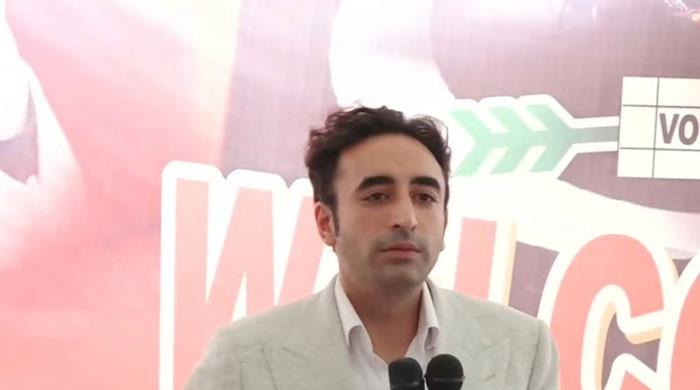
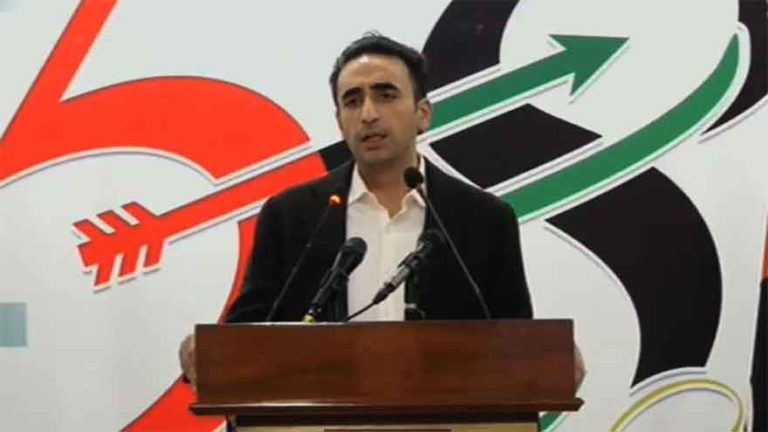
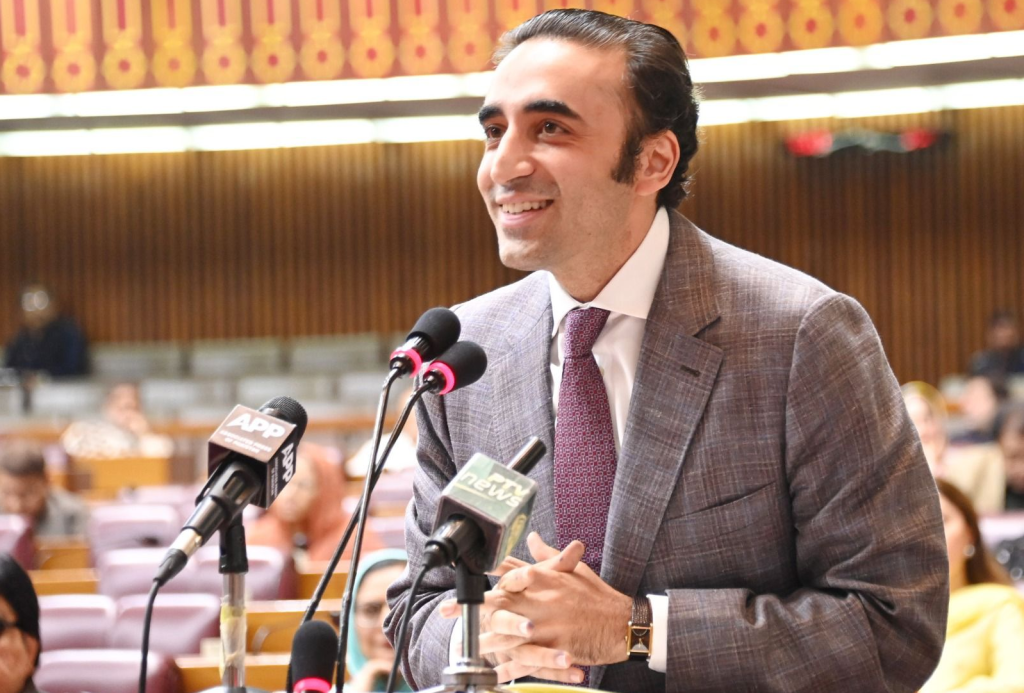
Chairman of the Pakistan Peoples Party, Bilawal Bhutto Zardari, addressed the National Assembly during the budget session, describing the recent agreement between the United States and Iran as a “new ray of hope” for the region and the world. He emphasized that the deal demonstrates the superiority of dialogue over war and diplomacy over confrontation.
Bilawal extended felicitations to Prime Minister Shehbaz Sharif and President Asif Ali Zardari for their consistent advocacy for peace. He also paid tribute to Field Marshal General Syed Asim Munir and the Armed Forces for defending the nation and bringing pride to Pakistan through their leadership.
Pakistan’s Stance on Peace and Economic Necessity
Bilawal noted that Pakistan the heavy cost of war, having sacrificed loved ones, fought terrorism, and endured economic instability. “This is why Pakistan always raises the flag of peace,” he said, “because it is not just a moral obligation but an economic necessity.” He argued that peace fosters trade, investment, and employment, and that true national greatness comes from providing hope and opportunity to citizens, not just military might.
He stressed that Pakistan must also progress as the world moves toward peace, but acknowledged ongoing security challenges. “Our region is not entirely peaceful,” he warned, citing threats from Afghanistan, India’s threats of “Operation Sindoor 2,” attempts to undermine the Indus Water Treaty, and foreign-backed terrorism.
Political Consensus and Constitutional Solutions
Bilawal pointed out that despite the 18th Amendment and NFC Award, provinces face economic constraints. He cited the petroleum levy introduced during the 2008-2013 PPP government for flood relief, which continues to be collected without provincial sharing, violating the 18th Amendment. He noted that provinces like Punjab showed a surplus of 700 billion rupees last year and 900 billion this, while Sindh showed 400 billion, money that could have been spent on local development. He called for a long-term, sustainable plan for growth-oriented economic policies after the budget.
Defending BISP and Economic Justice
Bilawal strongly defended the Benazir Income Support Programme (BISP), calling attacks on it “unfortunate and shameful.” He cited World Bank and IMF recognition, arguing that poverty alleviation requires expanding the program, not reducing it. He praised Sharif for expanding B despite opposition, noting its support for millions of households, education, healthcare, and disaster relief. “The BISP is also good economics,” he said, “since progress begins from the downtrodden.” He linked it to national security, arguing that winning hearts and minds is essential against insurgency and extremism.
He emphasized that Pakistan’s economy thrives when small farmers and laborers prosper, not just large landowners and mill owners. He recounted a story about CPEC’s western route, arguing that prioritizing underdeveloped areas creates more opportunities. “The objective is to introduce growth-oriented projects so that the country is not run on loans but experiences true progress,” he said.
Gilgit-Baltistan and Kashmir
Bilawal thanked the people of Gilgit-Baltistan for trusting the PPP, which won 11 seats. He criticized the historical imposition of the FCR system and pledged governing, ownership, and employment rights for GB. Regarding Kashmir, he asked how long Kashmiris would remain deprived of representation in the House, requesting interim seats until a plebiscite. He warned against the “Israel-India nexus” targeting Pakistan through terrorism and issues with Afghanistan, calling for collective action to protect fault lines.
On the situation in Azad Kashmir, Bilawal urged protestors to disperse and engage politically, insisting that decisions for Kashmir must be made Kashmiris themselves. He proposed that muhajireen seats be determined through elections in Kashmiri areas to ensure representation. “Only Kashmiris will make decisions for Kashmir,” he affirmed.
Indus Water Treaty and Water Security
Bilawal addressed threats to the Indus Water Treaty, stating that Pakistan is ready to fight for it as a matter of survival. He appreciated DPM and FM Dar’s international efforts and called for completing ongoing projects. He also mentioned President Zardari’s initiative to secure water through Central Asian republics, with a $3 million feasibility study completed, as a potential solution to water issues.