
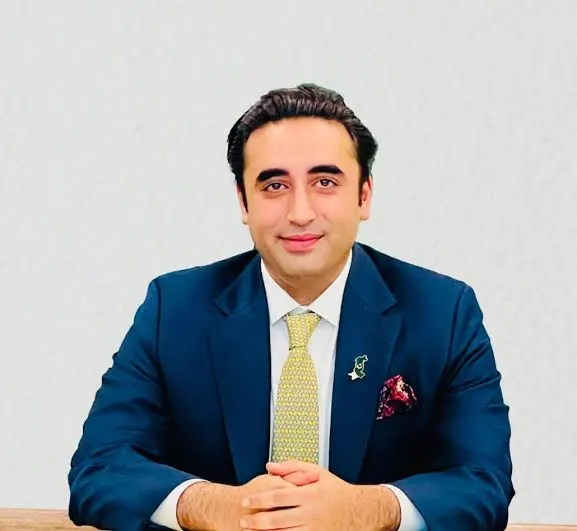
Early Life
Bilawal Bhutto Zardari was born on 21 September 1988 in Karachi, Pakistan, into the most prominent political dynasty in the country. He is the son of Mohtarma Benazir Bhutto, the first female Prime Minister of Pakistan, and Asif Ali Zardari, who served as the 11th President of Pakistan. Bilawal is the grandson of Zulfikar Ali Bhutto, the founder of the Pakistan Peoples Party (PPP). From birth, Bilawal was destined to carry forward the political legacy of the Bhutto family.
He received his early education in Pakistan before moving to the United Kingdom for further studies. Bilawal attended the prestigious Oxford University, where he studied History and was a member of the Oxford Union debating society. His time at Oxford helped shape his political thinking and prepared him for his future role in Pakistani politics.
Entry into Politics
Bilawal Bhutto Zardari entered politics at a very young age, thrust into the leadership of the PPP following the assassination of his mother, Benazir Bhutto, on 27 December 2007. At just 19 years old, he was appointed as the Chairman of the Pakistan Peoples Party, becoming the youngest person to lead a major political party in Pakistan. His appointment was seen as a symbolic gesture to unite the party and carry forward the legacy of the Bhutto family.
Due to his young age and the political instability in Pakistan at the time, Bilawal initially focused on his education while his father, Asif Ali Zardari, served as co-chairman and managed the party’s day-to-day affairs. He made his formal political debut in December 2008 at the party’s foundation day rally in Garhi Khuda Bakhsh, where he addressed a large crowd of supporters and pledged to continue the mission of his mother and grandfather.
Education and Preparation for Leadership
Bilawal Bhutto Zardari’s educational journey reflects his commitment to understanding global affairs and preparing for his political role. After completing his early education in Pakistan, he attended the University of Oxford, where he graduated with a degree in History. His academic background gave him a deep understanding of political systems, historical movements, and global affairs.
Before fully entering politics, Bilawal worked with various international organizations and focused on understanding the complexities of governance and diplomacy. He spent time in the United Kingdom and traveled extensively, building networks and gaining insights into international relations that would later inform his political approach.
“My mother taught me that the greatest weapon in the world is the truth.”
— Bilawal Bhutto Zardari
Rise to Political Prominence
Bilawal Bhutto Zardari gradually increased his political involvement as he matured. In 2019, he formally began his active political campaign, addressing rallies across Pakistan and mobilizing the party’s youth wing. He focused on connecting with young voters and addressing issues such as climate change, economic inequality, and the need for democratic reforms.
In 2024, Bilawal Bhutto Zardari became the 11th President of Pakistan, following his father’s re-election to the presidency. This historic achievement marked a new chapter in the Bhutto-Zardari political dynasty. His presidency has focused on youth empowerment, climate action, and strengthening democratic institutions in Pakistan.
Key Initiatives and Achievements
- Youth Empowerment: Bilawal has been a vocal advocate for youth rights and opportunities, launching programs to provide education, employment, and entrepreneurship opportunities for young Pakistanis.
- Climate Change Action: As a young leader, he has prioritized environmental issues and pushed for policies to address Pakistan’s vulnerability to climate change, including the expansion of renewable energy projects.
- Democracy and Human Rights: Following in his mother and grandfather’s footsteps, Bilawal has been a strong proponent of democracy, human rights, and the rule of law. He has spoken out against authoritarianism and worked to strengthen Pakistan’s democratic institutions.
- Gender Equality: He has championed women’s rights and gender equality, continuing the legacy of his mother, who was a trailblazer for women’s empowerment in Pakistan.
- Economic Development: Bilawal has focused on economic development and poverty alleviation, expanding social welfare programs such as the Benazir Income Support Programme (BISP) and introducing new initiatives to support small businesses and farmers.
Political Philosophy
Bilawal Bhutto Zardari’s political philosophy is deeply rooted in the principles of the Pakistan Peoples Party: democracy, social justice, and the empowerment of the common people. He has often spoken about the need for a progressive and inclusive Pakistan where all citizens, regardless of their background, have equal opportunities to succeed.
He has described his vision as continuing the mission of his mother and grandfather, emphasizing that the Bhutto family’s struggle has always been about the rights of the people. Bilawal has also stressed the importance of dialogue and reconciliation in politics, advocating for a peaceful and cooperative approach to governance.
Personal Life
Bilawal Bhutto Zardari is known for his youthful energy, charismatic personality, and ability to connect with people across generations. He enjoys reading, traveling, and engaging with youth groups and activists. Despite his privileged upbringing, he has shown a deep understanding of the struggles of ordinary Pakistanis and has worked to bridge the gap between the political elite and the common people.
As the scion of Pakistan’s most famous political family, Bilawal carries the weight of his family’s legacy while forging his own path. He is married to Ayesha Khan, and they have two children together. His family’s continued involvement in politics ensures that the Bhutto-Zardari legacy will endure for generations to come.
Future Vision for Pakistan
Bilawal Bhutto Zardari has articulated a vision for Pakistan that focuses on building a modern, progressive, and democratic nation. He has spoken about the need to reform Pakistan’s education system, invest in healthcare, and create economic opportunities for all Pakistanis. His presidency is expected to focus on youth empowerment, climate resilience, and strengthening Pakistan’s international standing.
He has also emphasized the importance of rule of law and justice, pledging to ensure that all Pakistanis have equal access to justice and that the rights of minorities are protected. Bilawal’s vision reflects his commitment to the ideals of the Pakistan Peoples Party and his determination to build a brighter future for Pakistan.