
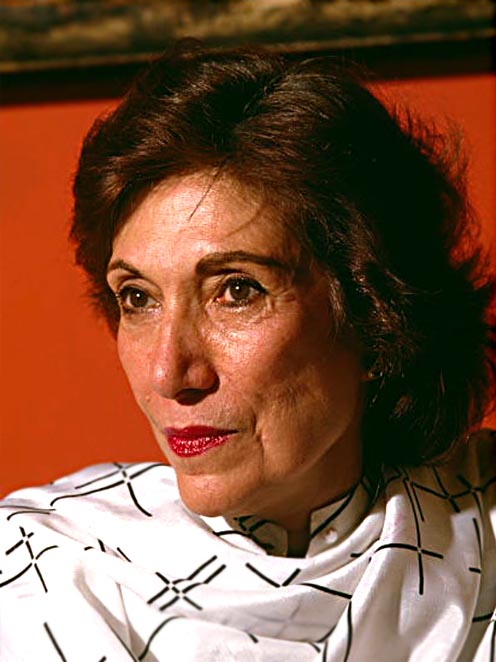
Early Life
Begum Nusrat Bhutto was born on 23 March 1929 in Bombay (now Mumbai), India, into a distinguished Kurdish-Iranian family. Her father, Khursheed Ahmad Khan, was a businessman who later moved to Pakistan after the partition. Nusrat received her early education in Bombay and later attended the University of Bombay, where she developed a keen interest in literature and social issues. Her marriage to Zulfikar Ali Bhutto in 1951 marked the beginning of her lifelong journey in politics and public service.
Political Career
Nusrat Bhutto’s political career began in the 1960s when she actively supported her husband’s political endeavours. She played a crucial role in the formation of the Pakistan Peoples Party (PPP) in 1967, serving as its first vice-president. After the 1977 military coup and the subsequent arrest and execution of her husband in 1979, Nusrat Bhutto emerged as a powerful political figure and symbol of resistance against the Zia-ul-Haq regime.
She was elected as a member of the National Assembly of Pakistan in 1970 and again in 1977. During her husband’s imprisonment and after his execution, she led the PPP and became the chairperson of the party, continuing the democratic struggle against military rule. She was placed under house arrest numerous times and faced significant political persecution, yet she remained steadfast in her commitment to democracy and the vision of her husband.
Role in the Pakistan Peoples Party
As the chairperson of the PPP, Nusrat Bhutto led the party through its most difficult period. She travelled internationally to garner support for the restoration of democracy in Pakistan and to highlight the human rights violations committed by the military regime. Her leadership kept the party united and ensured the survival of the PPP during the dark years of dictatorship. She was a key figure in mobilising the Movement for the Restoration of Democracy (MRD) in the 1980s, which played a significant role in pressuring the military regime to hold elections.
Defining Moments
- 1977 Coup: After General Zia-ul-Haq’s military takeover, Nusrat Bhutto became the face of the opposition and the leading voice against the regime’s authoritarianism.
- 1979 Execution of Zulfikar Ali Bhutto: Following her husband’s execution, she courageously addressed the nation and the international community, demanding justice and the restoration of democratic institutions.
- 1980s Leadership: She led the PPP during the difficult years of martial law, keeping the party’s vision alive and preparing the groundwork for the eventual return to democracy.
- 1988 Elections: She played a pivotal role in the 1988 elections that brought her daughter, Benazir Bhutto, to power as the first female Prime Minister of Pakistan.
“The struggle for democracy is not just a political struggle; it is a struggle for the soul of Pakistan.”
— Begum Nusrat Bhutto
Later Life and Legacy
Nusrat Bhutto remained active in politics until her health began to decline in the late 1990s. She suffered from Alzheimer’s disease and spent her later years in Dubai, where she passed away on 23 October 2011 at the age of 82. Her funeral was held in Garhi Khuda Bakhsh, the Bhutto family mausoleum in Sindh, alongside her husband and other family members.
Begum Nusrat Bhutto is remembered as a symbol of resilience, courage, and unwavering commitment to democracy. She was a mother, a leader, and a stateswoman who dedicated her life to the ideals of the Pakistan Peoples Party – equality, justice, and the empowerment of the common people. Her legacy continues to inspire women and political activists across Pakistan and beyond.
Personal Life
Nusrat Bhutto was married to Zulfikar Ali Bhutto for 28 years until his execution in 1979. Together they had four children: Benazir, Murtaza, Shahnawaz, and Sanam. She was known for her elegance, intellect, and strength of character. Despite facing immense personal tragedy and political persecution, she remained a pillar of strength for her family and the party.