
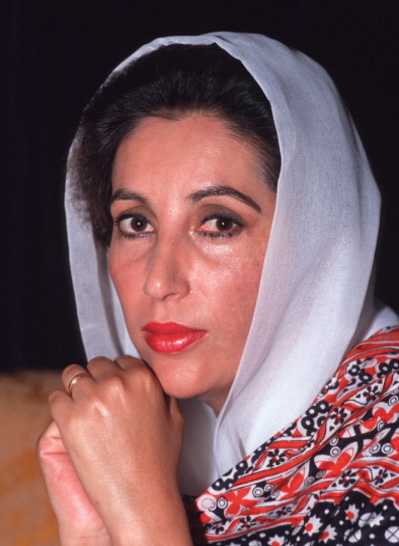
Early Life
Mohtarma Benazir Bhutto was born on 21 June 1953 in Karachi, Pakistan, into one of the country’s most prominent political families. She was the eldest child of Zulfikar Ali Bhutto and Begum Nusrat Bhutto. Benazir received her early education at the Lady Jennings Nursery and Convent of Jesus and Mary in Karachi, and later attended the prestigious Radcliffe College at Harvard University, where she graduated with a degree in comparative government. She then studied at the University of Oxford, where she became the first Asian woman to be elected President of the Oxford Union debating society.
Political Career
Benazir Bhutto’s political career was deeply influenced by her father’s legacy. After the execution of her father in 1979, she and her mother, Nusrat Bhutto, took over the leadership of the Pakistan Peoples Party (PPP). Benazir faced years of house arrest and persecution under the Zia-ul-Haq regime, spending much of the 1980s in exile or under detention. Despite these challenges, she emerged as a powerful symbol of resistance against military dictatorship.
In 1988, following the death of General Zia-ul-Haq, Benazir Bhutto led the PPP to victory in the general elections and became the first female Prime Minister of Pakistan, and the first woman to lead a Muslim-majority nation. She served two terms as Prime Minister, first from 1988 to 1990, and again from 1993 to 1996. Her governments focused on social reforms, women’s rights, and economic liberalisation, though she faced numerous challenges including political opposition, allegations of corruption, and economic difficulties.
Defining Moments
- 1988 Election Victory: Benazir Bhutto made history by becoming the first female Prime Minister of Pakistan and the first woman to lead a Muslim-majority country.
- Women’s Rights Advocacy: She established the first women’s police stations, women’s courts, and introduced quotas for women in government jobs. She also repealed several discriminatory laws against women.
- Social Reforms: Her government launched initiatives in education, healthcare, and social welfare, including the establishment of the Benazir Income Support Programme (BISP) to help the poor.
- 1999 Exile: After her second term ended, she went into self-imposed exile in Dubai and London to avoid political persecution, continuing to lead the PPP from abroad.
- Return to Pakistan (2007): After President Musharraf granted a general amnesty, Benazir returned to Pakistan in October 2007 to lead the PPP in the upcoming elections and restore democracy.
“In the end, the power of the people is stronger than the people in power.”
— Mohtarma Benazir Bhutto
Legacy
Benazir Bhutto’s legacy is one of courage, resilience, and unwavering commitment to democracy. She faced immense challenges throughout her life, including the trauma of her father’s execution, years of imprisonment and exile, and constant threats to her life. Yet she remained dedicated to the ideals of the Pakistan Peoples Party – democracy, social justice, and the empowerment of the common people.
Her assassination on 27 December 2007 in Rawalpindi was a tragic moment in Pakistan’s history and sent shockwaves across the world. She was killed in a suicide bomb attack at a political rally, just months after returning from exile. Her death was mourned globally, with world leaders paying tribute to her courage and her lifelong struggle for democracy.
Personal Life
Benazir Bhutto married Asif Ali Zardari in 1987, and they had three children: Bilawal, Bakhtawar, and Aseefa. She was a devoted mother and wife, despite the immense political pressures she faced throughout her life. Her husband and children continue to carry forward her political legacy, with Bilawal Bhutto Zardari currently serving as the Chairman of the Pakistan Peoples Party.
Assassination and Aftermath
On 27 December 2007, Benazir Bhutto was assassinated in Rawalpindi while leaving an election rally. The attack, which killed over 20 people, was a devastating blow to Pakistan’s democratic movement. Her assassination was widely condemned internationally, and investigations pointed towards militant groups. The tragic event led to widespread violence across Pakistan and delayed the elections, but ultimately, the PPP won the 2008 elections in a wave of public sympathy.
Her son, Bilawal Bhutto Zardari, was appointed as the Chairman of the PPP, continuing the Bhutto family’s political legacy. Benazir’s death marked the end of an era but her vision for a democratic, progressive, and equitable Pakistan continues to inspire millions.