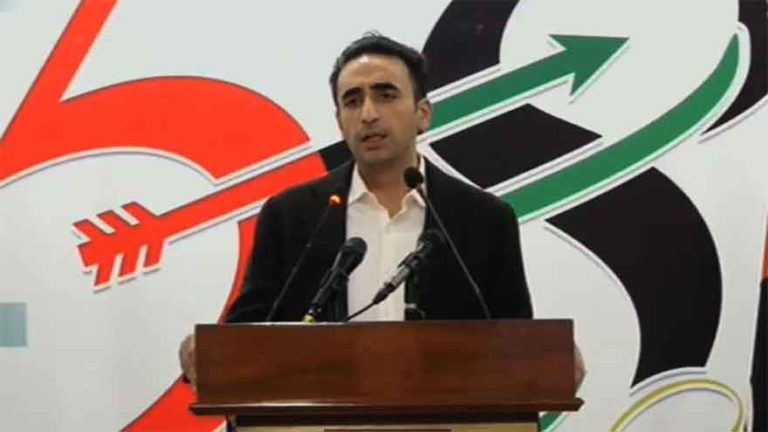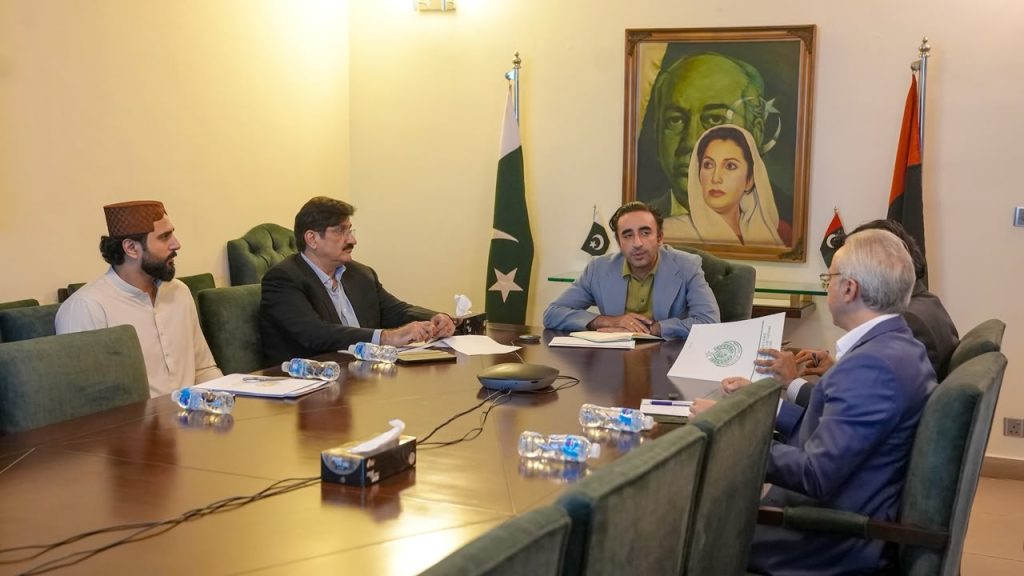
Pakistan Peoples Party Chairman Bilawal Bhutto Zardari convened a high-level strategy session in Karachi on July 10 to review a suite of transformative initiatives designed to catalyze economic growth, attract foreign investment, and position Sindh as a regional hub for infrastructure, finance, and technology.
The meeting, held at Bilawal House, brought together key provincial officials including Chief Minister Syed Murad Ali Shah, Agriculture Minister Sardar Muhammad Bakhsh Mahar, Chief Secretary Asif Hyder Shah, and Principal Secretary Agha Wasif. During the session, the Chief Minister briefed the Chairman on three landmark strategic initiatives to be developed under the Public-Private Partnership (PPP) framework.
The flagship Keti Bandar Integratedridor project aims to transform the coastal area into a world-class maritime, logistics, industrial, and energy hub. The proposed corridor envisions modern port infrastructure, logistics facilities, industrial development, energy infrastructure, fisheries, and tourism. Officials say the initiative will strengthen Sindh’s maritime economy, boost exports, generate employment, and attract significant domestic and foreign investment.
2>Sindh International Financial Centre to Boost Karachi’s Financial Status
The proposed Sindh International Financial Centre (SIFC) is designed to reinforce Karachi’s position as Pakistan’s financial capital. The centre would facilitate infrastructure finance, Islamic finance, climate finance, financial technology, international commercial services, dispute resolution, and global. The initiative is expected to mobilize capital for infrastructure, housing, technology, industrial development, and climate-resilient projects while enhancing investor confidence.
Green Data Infrastructure Initiative Targets Tech Giants
The Data Infrastructure Initiative aims to leverage Sindhs abundant renewable energy resources to establish renewable energy-powered data centres, cloud computing facilities, AI infrastructure, and digital technology parks. The project is intended to attract leading global technology companies and position Sindh as a regional destination for sustainable digital infrastructure investments.
Farmers’ Collectives to Modernize Agriculture
Agriculture Minister Sardar Muhammad Bakhsh Mahar presented a proposal to organize small farmers into legally recognized, democratic collectives. The initiative aims to improve productivity through shared farm machinery, efficient water management, renewable energy solutions, digital advisory services, market linkages, and financing opportunities. The meeting noted the potential to strengthen the agricultural sector through modern, collaborative farming practices while promoting climate-smart agriculture and higher farm incomes.
Institutional Strengthening and International Expertise
After detailed deliberations, the meeting agreed that executing projects of this scale requires institutional strengthening and specialized technical capacity. The proposal to transform the existing PPP Unit into a company was endorsed, providing greater operational flexibility and enabling the engagement of highly qualified specialists from the market.
It was further agreed that internationally renowned transaction advisors will be engaged to conduct comprehensive feasibility studies, develop competitive project structures and legal frameworks, and assist the government in attracting a broad pool of reputable domestic and international investors for implementation under the PPP framework.
Long-Term Vision for Economic Transformation
Chairman Bilawal Bhutto Zardari emphasized that these strategic initiatives represent a long-term vision for the economic transformation of Sindh. He reaffirmed the commitment to creating an enabling environment for private investment, innovation, and sustainable development through world-class Public-Private Partnerships. The meeting concluded that these projects have the potential to significantly enhance economic activity, create high-value employment opportunities, attract international investment, strengthen exports, and contribute substantially to the economic development of both Sindh and Pakistan.